There When You Need Them, Gone When You Don't: The Campground Host Approach to Your Website
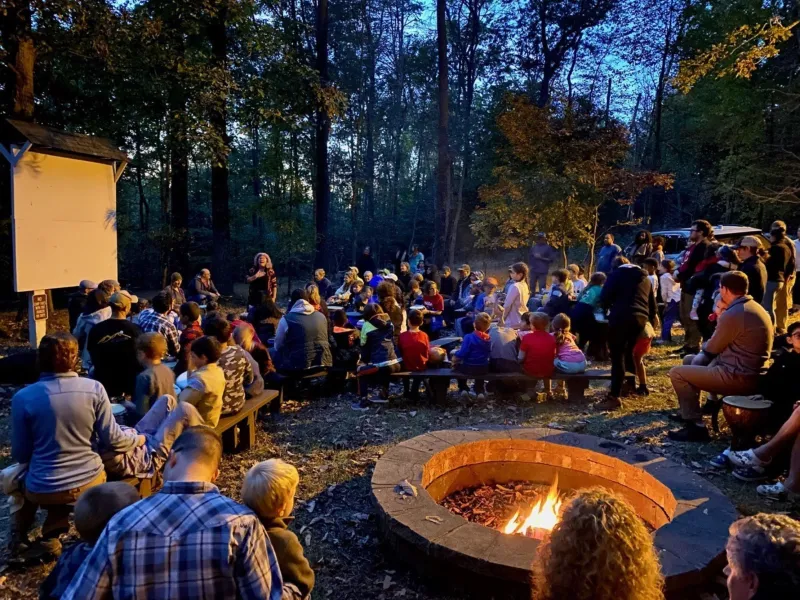
Photo: campground host campsite national park evening campfire, via www.nps.gov
Every national park campground has one. The host: a retired couple in a rig twice the age of your truck, parked at the loop entrance with a clipboard and a wave. They're not checking your reservation every hour. They're not knocking on your tent flap at dawn. But the moment your propane stove won't light or a raccoon gets into your cooler, they appear—helpful, unhurried, and genuinely glad you asked.
That's the model most small business websites should be copying, and almost none of them do. Instead, sites swing between two bad extremes: the ghost town, where a contact form vanishes into the void and nobody hears back for a week, or the helicopter parent, where a chatbot pounces the second the homepage loads with a cheerful "Need help finding anything?!" before the visitor has even read your headline.
The campground host rule sits in the middle. Be reliably present. Never be annoying. Here's how to apply it.
What Can Run on Autopilot
Campground hosts don't personally escort every visitor to the bathroom. Some things just work, with signage. On your website, the signage is automation—and a surprising amount of your site qualifies.
Autoresponders, done right. A confirmation email that says "Got your message, a real person will reply within one business day" isn't cold. It's the little sign at the host site that says "Back at 5, help yourself to the firewood." It sets an expectation and keeps it. What it should never do is pretend to be human. Nobody's fooled by "Hi! I'm so excited to connect with you!" from a robot at 2 a.m.
Contact forms with structure. A form that asks what they need—quote, support, scheduling—routes the request before a human ever sees it. That's not impersonal; that's the trail map at the trailhead. It saves everyone a detour.
FAQs and help pages. Eighty percent of the questions in your inbox are probably the same three questions wearing different hats. A well-written FAQ is the campground bulletin board: hours, rules, where the dump station is. Nobody resents the bulletin board for not being a person.
Scheduling tools. If a visitor can book a call or appointment without a single back-and-forth email, that's not automation robbing them of connection. That's the self-check-in kiosk at the entrance station—and most people prefer it.
Chatbots, with a hard limit. A chatbot that answers "What are your hours?" or "Do you ship to Ohio?" is fine. A chatbot that tries to handle "I have a problem with my order" is a host who gives you wrong directions to the trailhead and then won't admit they don't know. Cap the bot's authority. If the question involves money, emotion, or a mistake, it goes to a human. Immediately.
Where a Human Shows Up in Person
Then there are the moments automation can't touch—times when a form reply feels like getting a form letter from a friend.
Complaints and problems. When something went wrong, the customer wants to know one thing: does anyone here care? A templated response at this moment tells them no. Pick up the phone, or at least write an email that a person obviously wrote.
Big purchases and first-time customers. Someone about to spend real money with a small business is often choosing you over a big-box competitor precisely because they might talk to a human. A personal reply within a few hours here is worth more than any amount of chatbot polish.
Anything involving a mistake you made. Automating an apology is a contradiction in terms.
Referral and repeat customers. The folks who come back every season deserve to be greeted by name. A two-line personal email—"Good to hear from you again, Mrs. Delgado—same setup as last time?"—costs you ninety seconds and buys years of loyalty.
The Afternoon Test
Want to know where your site falls on the host spectrum? Block out two hours and run every customer touchpoint through three questions:
- Does this task repeat identically every time? If yes, automate it.
- Does this moment involve a mistake, money, or feelings? If yes, a human handles it.
- Would a customer feel handled or helped by this response? "Handled" is a form letter. "Helped" is a person.
Walk your contact form, your autoresponder, your checkout confirmation, and your complaint path in order. Most owners discover they've automated the wrong side: a chatty bot on the homepage and a three-day silence on support emails. That's a host who greets you at the gate and then disappears when the bear shows up.
Presence Isn't the Same as Hovering
The magic of the campground host is restraint. They trust the campground to mostly run itself, and they trust you to knock if you need them. Your website should radiate the same confidence: clear signage, working facilities, honest answers to common questions—all automated. And then, when someone genuinely needs a person, a person shows up fast.
That balance isn't a one-time setup, either. Check it a couple of times a year, the way you'd check the smoke detectors. Automation that made sense two years ago—like a chatbot you set up during a slow January—may now be scaring off customers who just wanted to read your pricing page in peace.
Be the host, not the hall monitor. Your visitors will notice the difference, even if they can't name it.